The error program, first tests
Victor Olafsson
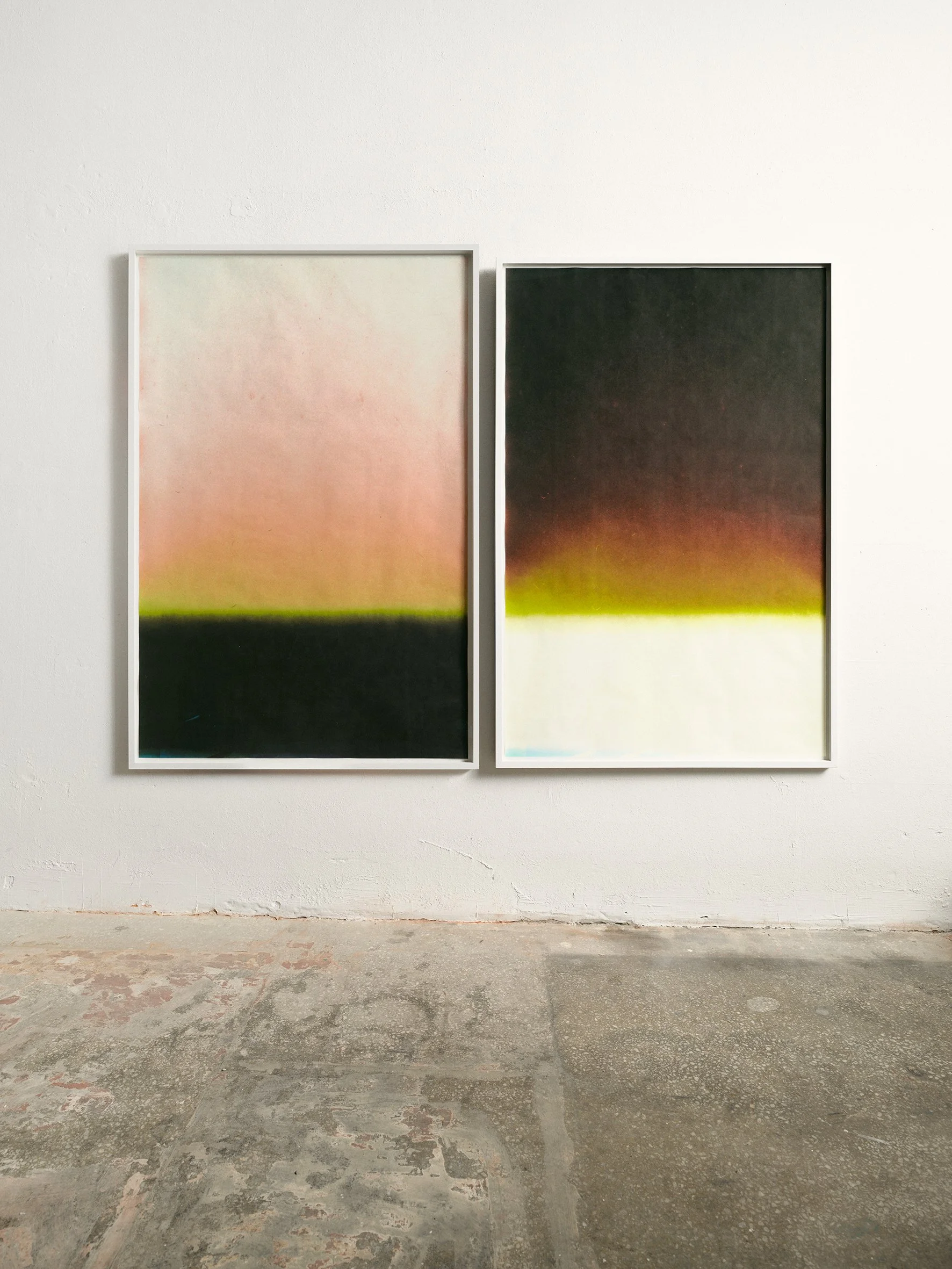
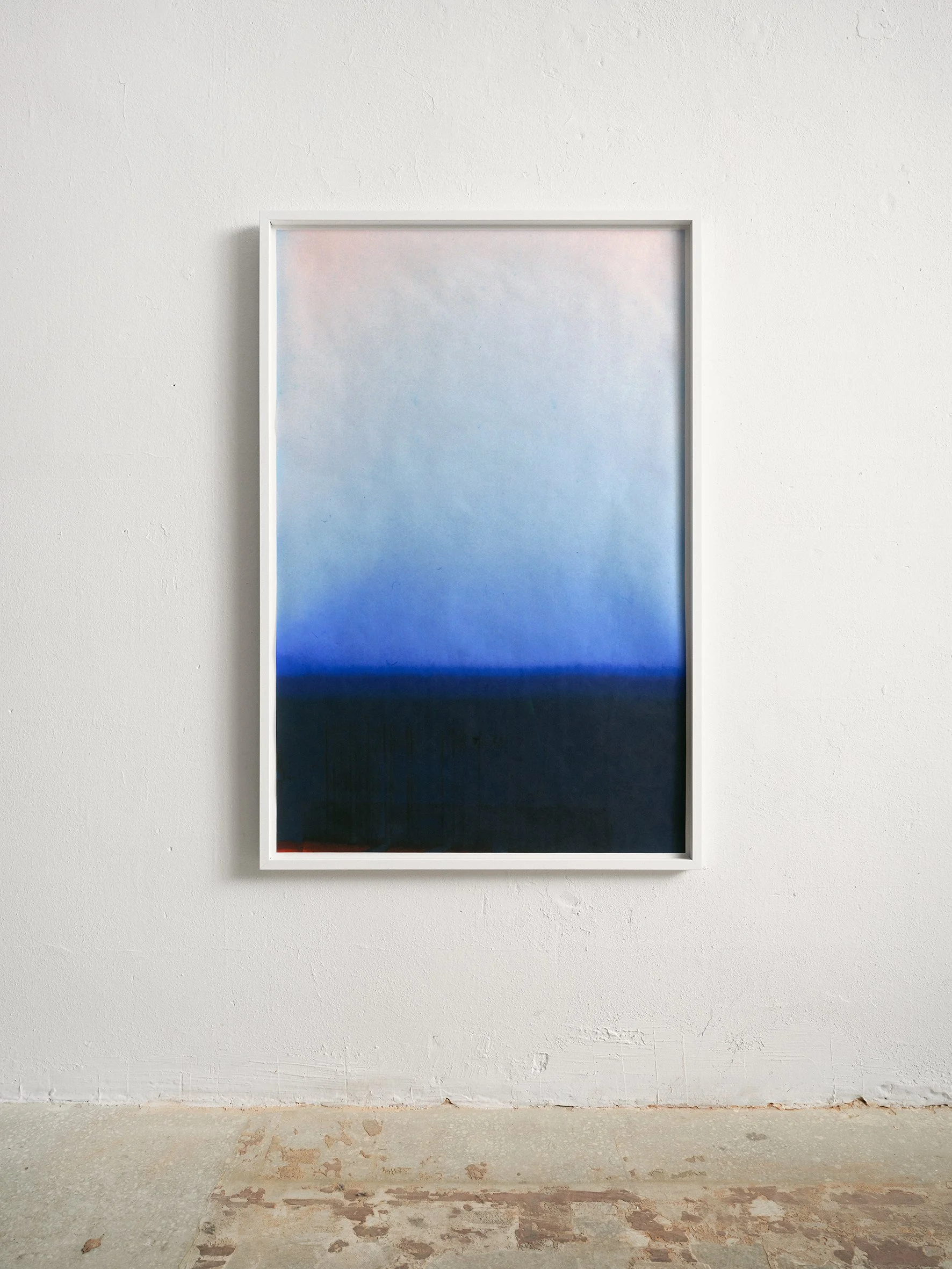
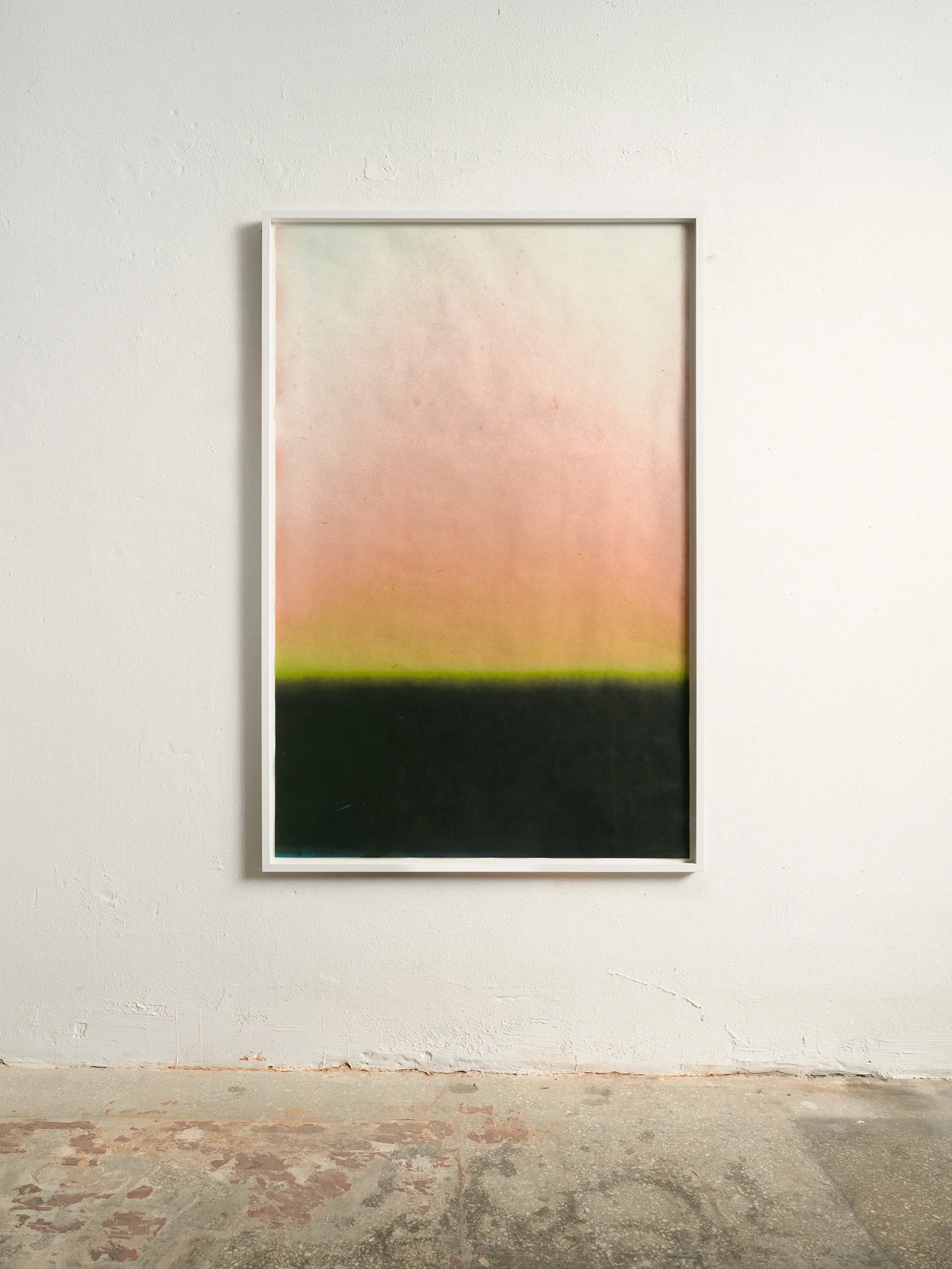
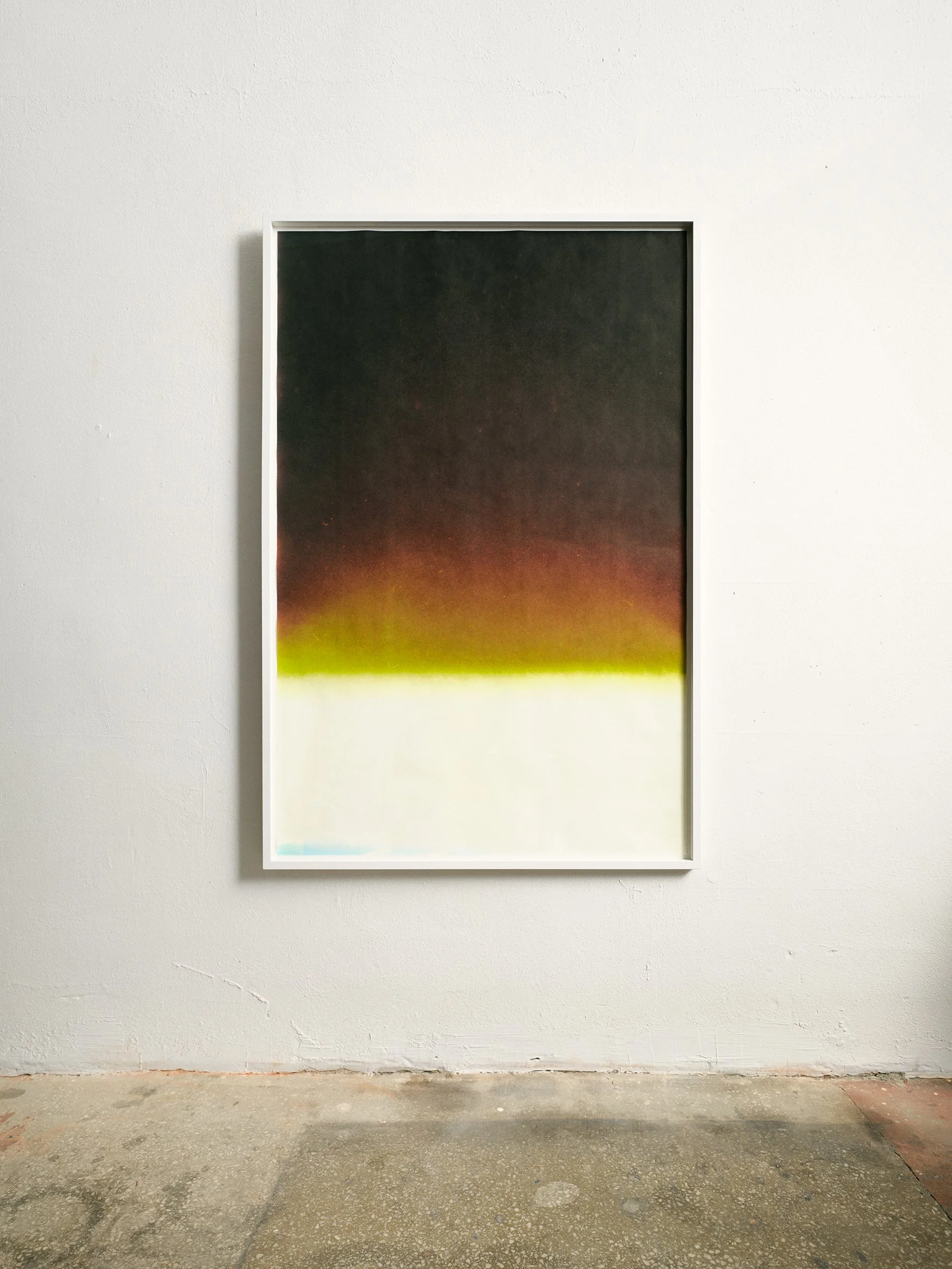
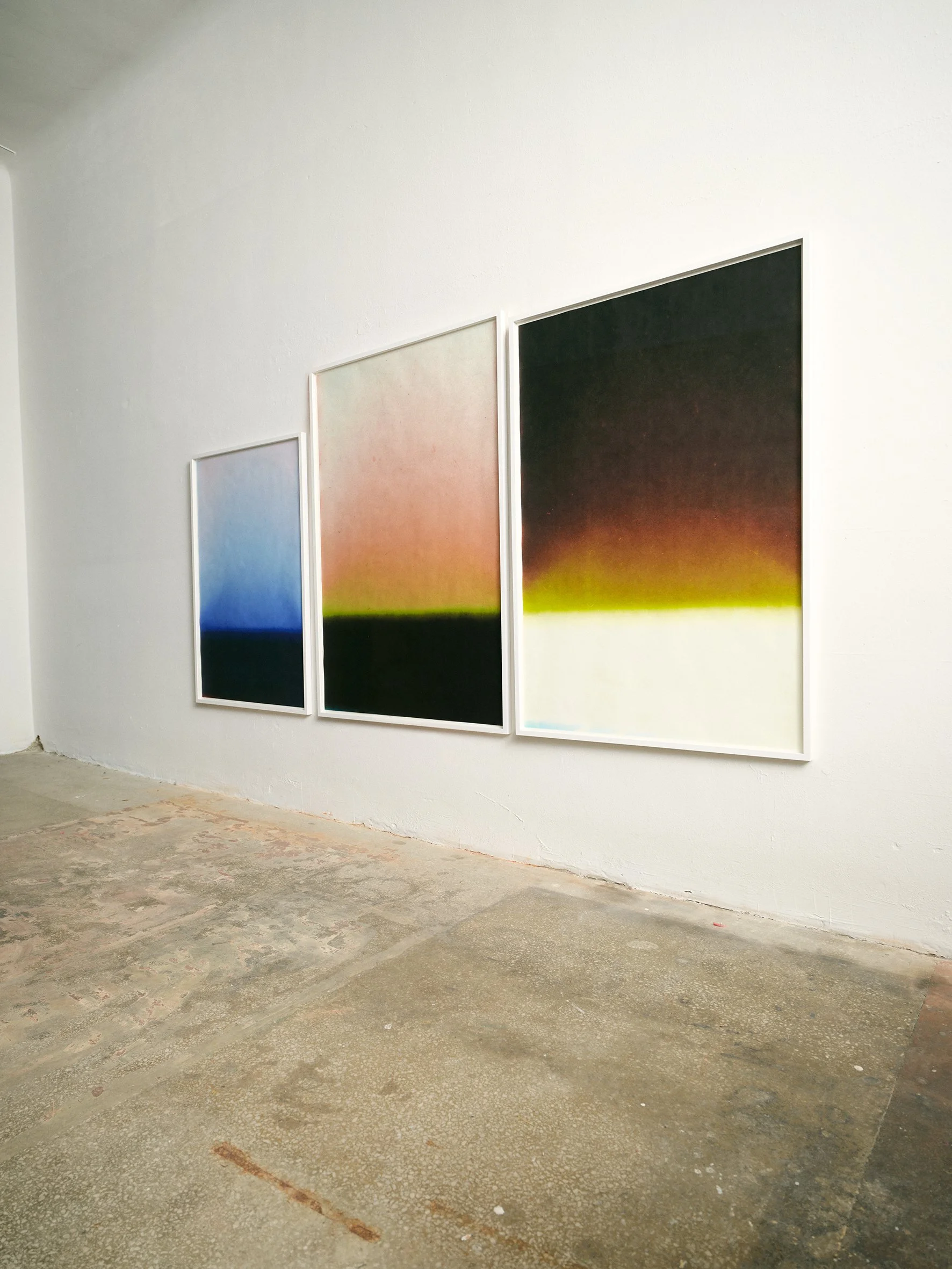
The Error Program. First Tests presents three analogue scans printed on Japanese kozo paper. The images were made at the very end of a film roll, a moment when the outcome is least predictable. The large scale images show uneven exposure and strong contrasts, allowing light and shadow to exist side by side without hierarchy. A horizontal line runs through each image, creating a sense of division—like a horizon, a sense of space, or a pause between two events. Rather than offering clarity, the line interrupts the image, introducing distance, hesitation, and quiet tension.
The works begin from an acceptance of uncertainty. Olafsson is drawn to moments when rules stop working as expected and results begin to slip out of control. By working against standard procedures and fixed uses, he tests the limits of structured systems. The final frame of the film becomes a charged moment—both fragile and resistant—where loss of control is allowed to appear.
These images also reflect a wider emotional condition shaped by pressure to perform, to fix, and to succeed. Instead of correcting instability, the works stay with it. They echo feelings of doubt, misalignment, and perceived failure. Uncertainty is not treated as a weakness, but as a space where new ways of seeing and thinking can emerge.